Save 42% with the Forks Meal Planner annual plan! SHOP NOW
Looking for a quick vegan breakfast that will keep you fueled all morning? This 10-minute tofu scramble deserves a spot in your regular rotation. Golden, turmeric-tinted crumbled tofu stands in for eggs, while pinto beans add extra heartiness and bring the protein count up to a whopping 18 grams per serving. Stir in your favorite store-bought or homemade salsa, then spoon the filling into warm corn tortillas and enjoy a healthy, satisfying start to the day.
1 15-oz. can no-salt-added pinto beans, rinsed and drained (1½ cups)
½ to ¾ cup jarred oil-free salsa
8 6-inch corn tortillas, warmed
Instructions
In a large skillet cook scallions over medium 2 minutes, stirring occasionally and adding water, 1 to 2 tsp. at a time, as needed to prevent sticking.
Meanwhile, pat tofu with paper towels until well-dried. Add turmeric, salt, pepper, and ¼ cup water to skillet; stir until well-combined. Crumble tofu into skillet; toss to coat.
Cook, uncovered, 3 to 4 minutes or until heated through, stirring frequently and adding water, 1 to 2 Tbsp. at a time, as needed to prevent sticking.
Add beans and salsa to tofu mixture; cook and stir 1 to 2 minutes or until heated through. Serve with tortillas.
These scrumptious roasted sweet potato fries are seasoned with smoked paprika and cumin for warm, smoky flavor that pairs beautifully with a tangy, creamy, herbaceous dipping sauce. Perfect for movie night, snacking, or serving alongside a burger, they’re easy to customize—reduce the smoked paprika or sub in sweet paprika for a milder vibe or add a pinch of cayenne for extra heat.
Tips
Storing the dip: Store dip in an airtight container in the refrigerator up to 1 week.
For more inspiration, check out these tasty ideas:
Preheat oven to 425°F. Line two large baking sheets with parchment paper or silicone baking mats. Cut sweet potatoes into ½-inch-thick planks. Stack a few of the planks and slice lengthwise to create ½-inch-thick fries. Repeat with remaining planks. Transfer fries to a large bowl. Add smoked paprika and cumin. Toss gently to coat.
Arrange fries evenly on the prepared baking sheets. Bake 30 to 35 minutes or until edges are crispy and golden brown, using tongs to flip halfway through cooking.
Meanwhile, for the dipping sauce, in a small food processor combine the tofu and the remaining ingredients. Cover and process until smooth. Cover and chill dip at least 10 minutes to allow flavors to merge. Serve fries hot with dipping sauce.
Adopting a whole-food, plant-based (WFPB) diet is one of the most effective lifestyle changes a person can make to reduce cardiovascular disease risk. As a physician who specializes in using lifestyle medicine to prevent and treat cardiovascular disease, I’ve seen firsthand how this way of eating can improve heart health via multiple angles, including cholesterol levels, arterial function, inflammation, blood sugar control, and overall metabolic health. Lab testing can be a useful tool for objectively tracking these changes, to understand how your body is responding and whether any additional adjustments may be helpful. But with so many possible tests available, it’s not always clear which ones provide the most meaningful data. Below is an overview of the most informative lab tests for assessing your heart health, along with guidance on how to interpret them in the context of a whole-food, plant-based diet.
Start With the Basics: A Standard Lipid Panel
A standard lipid panel is the logical place to start and is widely available. It measures:
Total cholesterol
LDL cholesterol
HDL cholesterol
Triglycerides
These markers provide a general snapshot of cholesterol and triglyceride levels in the blood. However, in some cases they don’t fully capture cardiovascular risk. For a clearer picture, additional testing can be helpful.
ApoB: A More Precise Indicator of Cholesterol-Related Risk
Apolipoprotein B (apoB) is one of the most valuable tests for assessing cardiovascular risk. ApoB reflects the total number of atherogenic (plaque-promoting) lipoprotein particles in the blood. Each ApoB particle has the potential to penetrate artery walls and contribute to plaque formation. Two people can have the same LDL cholesterol level but very different numbers of apoB—and therefore very different levels of risk.
Compared with LDL alone, apoB is more reliably linked to cardiovascular outcomes and is especially helpful for refining risk.
Lipoprotein(a)
Testing lipoprotein(a), or Lp(a) is also very important. Lp(a) is a potent, genetically influenced risk factor for cardiovascular disease. Unlike many other markers, Lp(a) doesn’t respond much to diet or currently available medications, but knowing your level helps put the rest of your results into proper context. If Lp(a) is high, being especially diligent about all other modifiable risk factors can still make a big difference, even if Lp(a) doesn’t go down.
hs-CRP: A Window into Inflammation
High-sensitivity C-reactive protein (hs-CRP) measures systemic inflammation, which is an independent contributor to cardiovascular disease. Elevated inflammation can increase risk even when cholesterol markers appear well controlled.
Hs-CRP is often very responsive to a whole-food, plant-based diet, making it a useful way to track how your dietary changes are reducing your inflammatory burden over time.
Metabolic Health Markers
Metabolic health also plays a major role in cardiovascular risk because it impacts the environment surrounding the blood vessels and how vulnerable they are to damage from cholesterol particles. Poor blood sugar control and insulin resistance can amplify cardiovascular risk—even when LDL or apoB levels are only moderately elevated.
Two key markers help assess risk in this area:
Hemoglobin A1c, which reflects average blood sugar over the past two to three months
Triglyceride-to-HDL cholesterol ratio, calculated from the lipid panel, which can provide more subtle insight into insulin sensitivity, in many individuals.
Thyroid-Stimulating Hormone
Thyroid-stimulating hormone (TSH) helps assess thyroid function, which can significantly affect LDL cholesterol and apoB levels.
Homocysteine
Elevated homocysteine may contribute to cardiovascular risk. Homocysteine is influenced by B-vitamin status, particularly vitamin B12 and folate.
When Lab Tests Aren’t Enough
Blood tests offer valuable information, but they don’t directly show whether plaque has already formed in the arteries. While it is not yet a standard guideline recommendation, I often recommend considering a one-time coronary artery calcium (CAC) scan in midlife (around ages 45 to 55 for men, 50 to 60 for women).
A CAC scan can reveal calcified plaque in the coronary arteries and help refine risk assessment beyond blood markers alone.
In addition, blood pressure should be monitored at least yearly starting in adolescence and continuing throughout adulthood.
General Reference for Optimal Ranges
These targets are provided as general reference ranges; individual goals may vary based on personal risk and medical history.
Lipid Panel
Total cholesterol: < 180 mg/dL
LDL-C: < 100 mg/dL (ideally < 70 if higher risk)
HDL-C: ≥ 40 mg/dL (men), ≥ 50 mg/dL (women)
Triglycerides: < 100 mg/dL
Triglyceride to HDL-C ratio: <2
apoB
< 80 mg/dL
< 65 mg/dL if higher risk
Lp(a)
< 30 mg/dL or < 75 nmol/L
hs-CRP
< 1.0 mg/L
Hemoglobin A1c
≤ 5.3%
TSH
0.5–2.0 mIU/L
Homocysteine
< 8 µmol/L
The Bottom Line
A WFPB diet can meaningfully reduce cardiovascular risk, but lab testing can help confirm that improvements are occurring across the pathways that matter most.
If only two or three blood tests are feasible, focusing on apolipoprotein B (apoB), high-sensitivity C-reactive protein (hs-CRP), and hemoglobin A1c captures a large proportion of cardiovascular risk from complementary angles.
Combined with non-lab metrics that are free and readily available (such as blood pressure, waist-to-hip ratio, and family history), this approach provides a surprisingly comprehensive picture of heart health.
Used thoughtfully and reviewed with a clinician, these tools can help guide adjustments and ensure that a whole-food, plant-based diet is delivering its full cardiovascular benefit.
These fluffy quinoa pancakes are the perfect way to start the day, striking just the right balance between nourishing and indulgent. Quinoa flour adds a robust, nutty flavor—if you’ve never tried it, these pancakes are a great way to give it a whirl—while lemon zest and juice and whole blueberries provide a fresh, zingy brightness. Top with an easy warm blueberry sauce and dig in!
For more inspiration, check out these tasty ideas:
3 cups fresh or frozen blueberries, thawed and drained
3 tablespoons pure maple syrup
2 teaspoons pure vanilla extract
1 lemon
1 cup unsweetened, unflavored plant-based milk
½ cup unsweetened applesauce
2 tablespoons flaxseed meal
1½ cups quinoa flour
1 teaspoon baking soda
Instructions
For blueberry sauce, in a small saucepan combine 2 cups of the blueberries, the maple syrup, and 2 tablespoons water. Bring to boiling; reduce heat. Cover and simmer 10 minutes or until blueberries start to burst. Stir in vanilla. Keep warm while preparing the pancakes.
Remove 1 teaspoon zest and squeeze 3 tablespoons juice from lemon. In a bowl whisk together juice and zest, milk, applesauce, and flaxseed meal. In another bowl whisk together quinoa flour and baking soda. Add milk mixture to flour mixture; stir until just combined. Fold in the remaining 1 cup blueberries.
Heat a nonstick skillet over medium. For each pancake, spoon a heaping ⅓ cup batter into skillet. Batter may be too thick to spread on its own; use spatula to spread to desired size. Cook 3 minutes or until edges are firm and bottom is light brown. Turn pancakes; cook 3 minutes more or until cooked through. Keep warm in a 200°F oven while cooking remaining pancakes. Serve with warm blueberry sauce and, if you like, additional fresh blueberries.
Perfect for brunch, a fun family meal, or a picnic, this crave-worthy vegan BLT brings big flavor to every bite. Tempeh transforms into smoky, savory “bacon” as it soaks in a bold marinade with beetroot powder for rich color and a hint of sweetness, plus tamarind paste for a tangy depth. Can’t find beetroot powder? Feel free to skip it, but don’t miss the homemade mayo!
Tip
Make-ahead: Most of the time for this recipe goes into marinating the tempeh and chilling the homemade mayo. For lightning-fast assembly, soak the tempeh in the marinade ahead of time (at least 1 hour). Make the mayo in advance, too—chilling it for at least 2 hours gives it the best flavor and texture. Both steps are easy to do the night before. With these out of the way, the satisfying sammy comes together in just 15 minutes.
For more inspiration, check out these tasty ideas:
1 large juicy tomato, such as beefsteak or heirloom, thickly sliced
4 butterhead lettuce leaves
Instructions
To make Vegan Mayo: In a blender combine tofu, lemon juice, 1 tablespoon apple cider vinegar, garlic, Dijon mustard, nutritional yeast, 1 teaspoon of the maple syrup, and 2 tablespoons cold water. Cover and blend on high speed until smooth and creamy, stopping to scrape down sides of blender occasionally and to add additional cold water, 1 tablespoon at a time, as needed to achieve desired consistency. Transfer to an airtight container and chill at least 2 hours or up to 1 week.
Using a sharp knife, slice tempeh into ¼-inch-thick strips. Arrange strips in a single layer in a 2-quart dish. In a medium bowl whisk together the next 9 ingredients (through pepper), plus the remaining 1 tablespoon of apple cider vinegar and 2 teaspoons of maple syrup. Pour mixture over tempeh. Cover and marinate at least 1 hour in the refrigerator.
Carefully remove the tempeh from the marinade and transfer slices to a clean plate. Preheat an extra-large nonstick skillet over medium. Using tongs, arrange tempeh in a single layer in the skillet. Cook over medium 2 to 3 minutes or until lightly browned on bottom; flip tempeh and cook 2 to 3 minutes more or until lightly browned.
To assemble sandwiches, spread toast with Tofu Mayo. Top with tempeh, tomato slices, and lettuce leaves. Serve immediately.
This tasty vegan pizza from Gianna Simone features a hearty gluten-free crust made with amaranth and quinoa (or buckwheat) flours. The mouthwatering recipe is easy to customize: You can shape the crust into a heart for a lovable twist, or go with the classic pie shape, and top it with bell peppers, umami-rich mushrooms, tangy artichokes, or whatever other veggies you’re craving!
Tip
Cast-iron: Cast-iron provides a naturally nonstick surface and even heat distribution for a nice crispy crust without any oil. If you don’t have a dedicated cast-iron pizza pan, you can use a regular cast-iron skillet.
1 heaping cup quinoa flour or buckwheat flour, plus more for dusting
1 heaping cup amaranth flour
2 tablespoons ground chia and ground flaxseed (or just ground flaxseed)
1 teaspoon Celtic salt (or sea salt)
¼ teaspoon garlic powder
¼ teaspoon onion powder
½ teaspoon dried oregano
½ teaspoon dried basil
1 tablespoon apple cider vinegar
1 tablespoon pure maple syrup
TOPPINGS
7 oz. salt-free tomato paste
1 orange bell pepper, diced
1 purple or red bell pepper, diced
3 small artichoke hearts, cut in half (I used jarred with no oil)
4 to 5 broccoli florets, chopped
3 olives, cut into halves
Handful of chopped mushrooms
Handful of sliced red onion
Instructions
Place pizza skillet in the oven and preheat to 350°F (180°C).
In a bowl, combine yeast and 1 cup of warm water; stir until cloudy and evenly mixed.
In large mixing bowl, whisk together the dry crust ingredients, then add the yeast mixture, vinegar, and maple syrup, and knead to form a dough ball. Let dough sit for 3 to 5 minutes. Liberally dust a work surface with flour and roll out the dough. If dough is too sticky, add a little more flour; if the dough doesn’t hold together, add a bit more water.
Form dough into your desired crust shape: round, square, heart, etc.
Wearing an oven mitt, place shaped crust on preheated pizza skillet, and bake just the crust for 5 minutes. Remove from oven, spread crust with tomato paste, and add toppings.
Return pizza to oven and cook for an additional 30 minutes or until desired crispness is reached.
Remove, let cool for about 5 to 10 minutes, slice, and enjoy!
My relationship with food was established long before I understood health. I grew up eating fried foods, refined carbohydrates, dairy, sugary treats, and frequent takeout and fast food. In my early 20s, that pattern only deepened: Eating out was normal, convenience came first, and vegetables were more of an afterthought than a meaningful part of my meals.
By my late 20s, I was living with the consequences. When I was just 28, my doctors placed me on medications for hypertension and severe GERD and digestive issues. I was also diagnosed with prediabetes and clinical depression—struggling physically, mentally, and emotionally. My symptoms continued to escalate. I developed a gastric ulcer; my doctors became concerned that it was worsening and warned that, over time, it could potentially become cancerous if left untreated. They started to discuss surgery, which only increased my fear and anxiety.
Around the same time, I was diagnosed with sleep apnea. I struggled to breathe properly, especially at night, and woke up exhausted despite hours in bed. I was prescribed a CPAP machine to help at night, but my breathing often felt labored even during the day. There were moments when I genuinely worried I might be having a heart attack. I lived in constant fear.
At my lowest point, I was taking nearly 10 different medications to manage all my conditions. Instead of feeling better, I felt overwhelmed and disconnected from my body. I knew I couldn’t accept a future defined by escalating prescriptions and procedures. I wanted to truly heal, not just manage my symptoms.
A Seed of Hope
While desperately searching for answers, I came across Dr. Dean Ornish’s book Reversing Heart Disease. I wasn’t diagnosed with heart disease, but I had shortness of breath every day and feared that something was wrong with my heart. Reading that book gave me something I hadn’t felt in a long time: hope that my health trajectory could change.
I began reading everything I could about whole-food, plant-based (WFPB) living, and that’s how I found Forks Over Knives. At first, the notion of a WFPB lifestyle felt too challenging. Meat and dairy had been a major part of my life for years. But I knew two things for certain: I didn’t want surgery, and I didn’t want my health to keep declining. I felt like I had no other option but to try something radically different.
I watched the Forks Over Knives documentary and began using the Forks Over Knives recipe app. The app became a daily companion, helping me find approachable recipes I could cook at home. My mom supported me throughout this transition, and together we began preparing nourishing plant-based meals.
I didn’t make the switch overnight. Moving from a diet centered on meat, dairy, and fried foods to a fully WFPB lifestyle was a massive change physically, emotionally, and culturally. I focused on consistency rather than perfection, trusting the process even when progress felt slow.
Within a few months, my body and my mind began responding in ways I never expected.
Results Beyond the Scale
Around three months into this lifestyle, my health markers started improving significantly. My blood pressure dropped, my blood sugar stabilized, and my mood began lifting as my energy returned. Although my doctors were initially skeptical that I would be able to reduce or eliminate any medications, especially since I was obese at the time, they agreed to closely monitor my progress. As I lost weight and my labs continued improving, they reduced my medications one by one. Over the span of roughly five months, I was able to safely discontinue nearly all of them.
I went on to lose over 100 pounds. Even more meaningful: The conditions that once controlled my life began to resolve. My blood sugar normalized, and I no longer have prediabetes. My blood pressure returned to a healthy range. My inflammation decreased, and my mental health improved. My sleep and breathing improved until I no longer needed a CPAP machine. GERD took the longest, but within about six months, those symptoms finally resolved too.
5 Years Later
Today, I’ve been free of these diagnoses—and off all medications—for more than five years.
This lifestyle didn’t just help me lose weight. It gave me my breath back. It cleared the mental fog. It helped me trust my body again. Now I move daily, eat with joy instead of fear, and feel grounded in my choices.
To deepen my understanding, I completed the Forks Over Knives Cooking Course, which strengthened my confidence in the kitchen and reinforced the “why” behind this way of eating. I’m still learning, growing, and refining my lifestyle every day.
The day I went off my last medication, I made a promise to myself: If this lifestyle could help me reclaim my health, I wouldn’t keep it to myself. Now I support and guide people who are seeking natural healing through a WFPB lifestyle. I’m deeply grateful to share my story so others know that healing is possible.
Meet your new brunch go-to! Bright and cozy, this healthy plant-based French toast gets its warmth from cinnamon and ginger and a fresh lift from lemon zest. Almond milk adds a subtle nuttiness (though any plant milk works), while chickpea flour and flaxseed meal create an egg-like batter that cooks up beautifully golden. Serve it straight from the pan with maple syrup and a crunchy shower of pepitas or sunflower seeds.
Storage: French toast will keep in a covered container in the refrigerator up to 2 days, but it’s best served fresh and hot because it gets soggy after it cools.
For more inspiration, check out these tasty ideas:
Preheat oven to 200°F. Place a baking sheet in the oven.
Remove 1 teaspoon zest (plus more for garnish, if you like) and squeeze 1 teaspoon juice from lemon; place in a shallow bowl. Add the next six ingredients (through salt); whisk until well combined. Add chickpea flour; whisk until incorporated and slightly thickened. (Mixture should be thinner than pancake batter.)
Preheat a large nonstick skillet over medium. Dip a slice of bread in the batter 5 seconds per side. Remove bread from batter, letting excess liquid drip off. Repeat with another slice of bread. Lay slices in hot pan; cook 3 minutes per side or until light golden brown and batter has set, gently pressing with a large spatula to ensure even heating. Transfer cooked slices to baking sheet in oven to keep warm. Repeat with remaining bread and batter.
Drizzle French toast with maple syrup and top with pepitas and/or sunflower seeds and additional lemon zest (if using). Sprinkle with additional cinnamon.
This cozy, single-skillet supper pairs tender red potatoes and hearty chickpeas with sweet-tart dried apricots and warming curry powder for a dish that feels both nourishing and a little unexpected. With just five ingredients (plus salt and pepper) and one pan to wash, it’s the kind of low-effort, high-reward meal you’ll want on repeat—especially on busy weeknights when you still crave something flavorful and satisfying.
For more inspiration, check out these tasty ideas:
2 lb. red potatoes, cut into 1-inch pieces (7½ cups)
1 cup dried apricots, slivered
2 teaspoons curry powder
¼ teaspoon sea salt
Pinch freshly ground black pepper
2 15-oz. cans chickpeas, rinsed and drained (3 cups)
4 lemon wedges
Instructions
In an extra-large deep skillet with lid combine the first five ingredients (through pepper) and 2 cups water. Bring to boiling; reduce heat to medium. Simmer, covered, 10 minutes or until potatoes are just tender. Stir in chickpeas. Increase heat to a gentle boil; boil until most of the cooking liquid is gone, about 5 minutes. Let stand 5 minutes before serving. Serve with lemon wedges.
Earthy red beans and crunchy cabbage make this vibrant coleslaw both satisfying and fresh. Rosemary adds an unexpected herbal note that pairs beautifully with creamy tahini, while Dijon and apple cider vinegar keep things bright. Use green cabbage for contrast, or red for a striking, all-red salad.
Tips
Gluten-free version: To make this gluten-free, use a gluten-free brand of Dijon mustard.
For more inspiration, check out these tasty ideas:
1 tablespoon chopped fresh rosemary or 1 teaspoon dried rosemary
1 tablespoon pure maple syrup
2 cloves garlic
½ teaspoon freshly ground black pepper
¼ teaspoon sea salt
2 15-oz. cans no-salt-added red beans, rinsed and drained (3 cups)
4 cups shredded cabbage
1 cup thinly sliced celery
1 cup thinly sliced red onion
Instructions
For dressing, in a small blender or food processor combine the first eight ingredients (through salt) and 2 tablespoons water. Cover and blend until smooth.
In a large bowl toss together beans, cabbage, celery, and red onion. Add dressing; toss to coat.
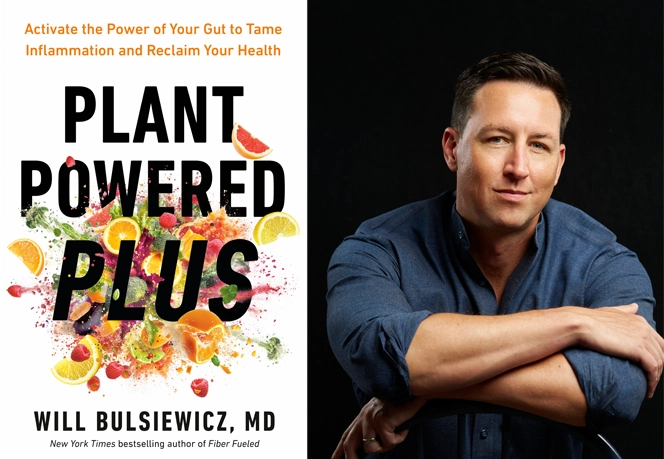
Longtime Forks Over Knives friend Will Bulsiewicz, M.D.—aka the “Gut Whisperer”—is back with a new book, Plant-Powered Plus, out January 13. In the new book, the gastroenterologist and bestselling author takes a clear, evidence-based look at common questions and misconceptions surrounding gut health and plant-based eating. In the abridged excerpt below, he examines one such claim. Learn more about Plant-Powered Plushere.
For the last 20 years, we’ve been given reason after reason to avoid beans and whole grains: They’re not ancestral; they have anti-nutrients like phytates; lectins are the cause of our health issues; gluten causes leaky gut. The result? We’ve been avoiding them. The average American eats just two ounces of beans per week while consuming nine times that amount in added sugar. And while 95% of Americans are deficient in fiber, 98% of Americans are deficient in whole grains. Is our avoidance justified? Or are we being fed misinformation that’s actually harming us in our food choices? My vote is for the latter. Here’s why.
First, beans and whole grains are jam-packed with prebiotic goodness. They’re about as high in fiber as you’ll find. They also deliver resistant starch. And they can be a source of a third type of prebiotics, which we are about to discuss, called polyphenols. These prebiotics work together in a synergistic fashion to support the microbiome and shift it back to health.
Second, the proof is in the research. We can keep this super simple—it doesn’t need to be complicated. Do beans cause inflammation? Quite the opposite. Multiple randomized controlled trials (RCTs) show that beans reduce inflammation in humans. How about whole grains? More of the same. We have literally a dozen RCTs showing less inflammation when you consume more whole grains.
Simply put, these are not inflammatory foods. That said, it’s possible that our modern agricultural practices may explain the reports out there of people developing inflammatory health issues. Both beans and whole grains are often sprayed with glyphosate after harvest because something you use to kill weeds can also be used to dry out beans and whole grains. This is why I personally opt for organic. I prefer my plants glyphosate-free. I prefer to not ingest weed killer.
Some individuals have celiac disease—an autoimmune condition where gluten triggers an immune response. If you experience symptoms when consuming gluten-containing grains, it’s important to get tested. Common tests include a blood test for tissue transglutaminase (tTG) lgA antibodies, an intestinal biopsy via endoscopy, and genetic testing for HLA-DQ2 and HLA-DQ8. Additional assessments, like lgG and lgA anti-gliadin antibody tests, can indicate gluten sensitivity. If any of these tests are positive, adopting a gluten-free diet makes sense. Even if tests are negative but symptoms persist—especially if you have an autoimmune or chronic inflammatory condition—it may be worth trying a gluten-free diet to see if you feel better. However, a gluten-free diet isn’t universally necessary or beneficial. In fact, research suggests that eliminating gluten-containing whole grains can increase the risk of heart disease and diabetes, so it’s crucial to weigh the benefits and drawbacks before making broad dietary changes.
To summarize my thoughts on the complex topic of gluten: First, if you are experiencing symptoms related to gluten, you should be tested for celiac disease. If your test is negative, know the evidence that gluten alone triggers the immune system in non-celiac individuals is weak—mostly supported by lab studies without solid human evidence. It’s possible that glyphosate, commonly sprayed on conventional wheat, could be the real culprit. This would explain why people enjoy gluten-rich foods in places like Italy without issues—another reason to choose organic. Additionally, non-gluten components of wheat, barley, and rye called fructans are known to cause digestive symptoms. This could be why many people feel better when eating sourdough bread, which naturally reduces fructan content. If you decide to go gluten-free, focus on incorporating gluten-free whole grains—such as quinoa, sorghum, teff, amaranth, buckwheat, and rice—to ensure you have a nutritious and balanced diet.
At their core, beans and whole grains are microbiome foods. More than most other plant-based foods, they powerfully feed and fuel your microbiome with fiber, resistant starch, and polyphenols. What that also means is that if you have a damaged gut, you are highly likely to struggle to digest them because these nutrients require your gut microbes in order to be digested. The result is that you might experience bloating, gas, and generally feel unwell. But bloating is not inflammation. It’s sloppy digestion. Your gut is struggling to keep up with the volume of prebiotics. The solution to this is to ease into these foods. Start low, and go slow.
A cashew-orange dressing transforms this shaved cabbage salad into something special—don’t be surprised if you want to lick your plate! Whole white beans are tossed into the salad for hearty texture, and more are blended into the dressing for extra silkiness. Crisp Napa cabbage and red onion mingle with sweet, chewy dried currants and juicy orange bites, while toasted sesame seeds add a subtle, nutty finish to this crowd-pleasing slaw.
For more inspiration, check out these tasty ideas:
1 15-oz. can no-salt-added white beans, rinsed and drained (1½ cups)
4 to 6 tablespoons orange juice
1 tablespoon lemon juice
½ teaspoon freshly ground black pepper
¼ teaspoon sea salt
6 cups shaved napa cabbage (8 oz.)
¾ cup thinly sliced red onion
⅓ cup dried currants or dried blueberries
2 medium oranges, peeled, halved, and sliced
2 teaspoons toasted black and/or white sesame seeds
Fresh parsley leaves (optional)
Instructions
Soak cashews in enough very hot water to cover 15 minutes; drain and rinse. For dressing, in a blender combine soaked cashews, ¼ cup of the beans, 4 tablespoons orange juice, the lemon juice, pepper, and salt. Cover and blend until very smooth, adding up to 2 tablespoons orange juice as needed to achieve drizzling consistency.
In a large bowl combine the remaining the remaining 1¼ cups beans, the cabbage, onion, and currants. Drizzle with dressing; toss to coat. Top with orange slices and sprinkle with sesame seeds and parsley (if using).